 UAE
UAE
 Qatar
Qatar
 Pakistan
 KSA
KSA
 Oman
Oman
 Kuwait
 Bahrain
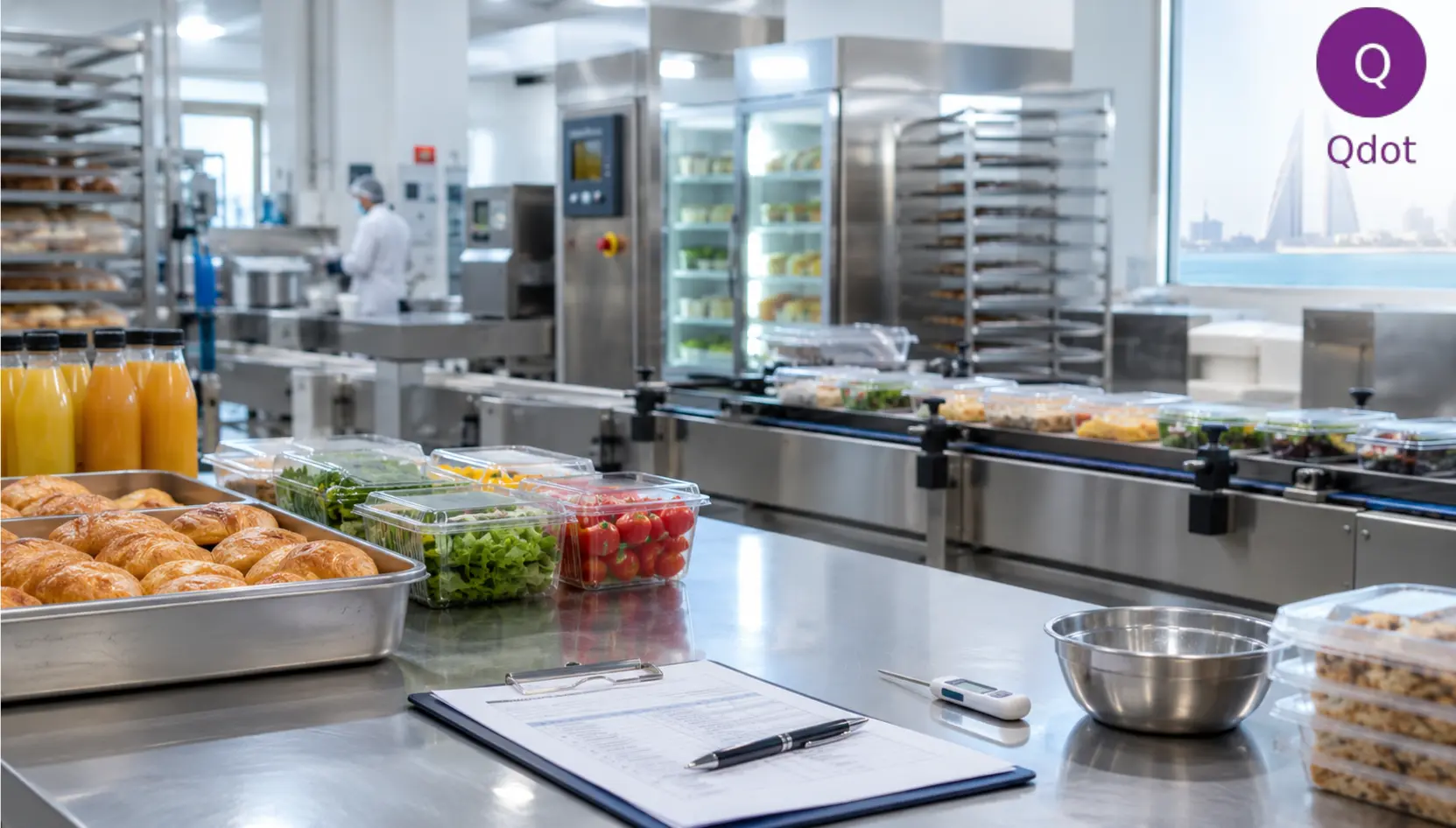
Bahrain's food and beverage sector covers everything from small bakeries in Isa Town to large processing plants in Bahrain International Investment Park, and from independent cafes in Adliya to hotel kitchens serving international events. Whatever the size of the business, the same question comes up sooner or later: can you prove your food is safe, consistently, every single time. That's what ISO and HACCP certification are built to answer.
A Food Market That Runs on Imports
Bahrain grows very little of its own food. Most raw materials, packaged goods and even fresh produce arrive by sea or air before reaching a shelf, a kitchen or a production line. That makes import compliance and supplier control a bigger issue here than in countries with strong domestic agriculture.
Several government bodies have a hand in this. The Ministry of Municipalities Affairs and Agriculture licenses and inspects food establishments and checks hygiene practices on site. The Ministry of Health, through the Public Health Directorate, sets rules for food imports and works to prevent foodborne illness. The Ministry of Industry, Commerce and Tourism handles business registration and product labeling. GCC-wide GSO standards also apply, covering areas like label content and shelf life.
For a food business, this means compliance isn't a single checklist. It's a mix of municipal hygiene rules, import documentation and labeling requirements that all need to line up. A management system built around HACCP and ISO 22000 gives you one structure that satisfies all of them at once, instead of managing each separately.
Who We Work With in This Sector
- Food manufacturers and processing plants, including facilities in Bahrain's industrial zones
- Restaurants, cafes and cloud kitchens across Manama, Seef and Muharraq
- Catering companies supplying hotels, exhibitions and events such as the Bahrain International Circuit calendar
- Bakeries and packaged food producers selling through local retail
- Food importers, distributors and cold storage suppliers
- Hotel and resort kitchens serving both guests and banquet events
Where Food Businesses in Bahrain Usually Get Caught Out
Most food safety problems aren't dramatic. They build up quietly until an inspection, a client audit or a complaint brings them to the surface.
- Inconsistent standards across branches or shifts. A restaurant group with three outlets often finds hygiene practice differs between locations, because there's no written system that everyone follows the same way.
- Weak control over imported ingredients. Without a documented process for checking supplier certificates, cold chain records and expiry dates at the point of receiving, one bad batch can move through your kitchen or line before anyone notices.
- Pressure during peak events. Catering companies working around Bahrain's exhibition and racing calendar often scale up staff quickly for a single event, and food safety training doesn't always keep pace with that.
- Documentation gaps at inspection time. Many kitchens follow good practice day to day but can't produce records to prove it, which slows down municipal inspections and retail or hotel vendor approvals.
- Treating HACCP as a one-off exercise. A hazard plan written once and left untouched stops matching what actually happens on the floor, especially after a menu change or new supplier.
ISO Standards That Actually Fit Your Business
Not every standard applies to every food business. Here's how the relevant ones break down.
| Standard | What It Covers | Who It Suits Most |
|---|---|---|
| HACCP | Identifies and controls hazards at specific points in food handling or production | Restaurants, caterers, and manufacturers as a baseline system |
| ISO 22000 | A full food safety management system built around HACCP principles | Manufacturers, processors, and larger multi-outlet operators |
| FSSC 22000 | Adds stricter requirements on top of ISO 22000 for global recognition | Manufacturers exporting or supplying international retail chains |
| ISO 9001 | Manages consistency in quality, supplier selection and internal processes | Businesses running multiple branches or production lines |
| ISO 45001 | Manages workplace safety risks such as burns, slips, and equipment injuries | Processing plants and commercial kitchens with larger staff teams |
| ISO 14001 | Manages water use, waste and environmental impact | Manufacturers, especially those needing environmental approvals for plant setup |
HACCP and ISO 22000 are usually the starting point for most food businesses in Bahrain. ISO 9001 and ISO 45001 tend to come next once a business is running more than one site or a larger production floor, and FSSC 22000 or ISO 14001 become relevant once export markets or environmental approvals enter the picture.
How Qdot Takes You From Gap to Certificate
- Gap assessment. We review your current hygiene practices, supplier records and documentation against the standard you're targeting, and tell you plainly what's missing.
- Documentation. We help build the food safety manual, hazard analysis, standard operating procedures and record templates your team will actually use.
- Implementation support. We work with your kitchen, production or quality staff to put the new procedures into daily practice, not just on paper.
- Staff training. Your team learns HACCP principles, hygiene procedures and how to keep records that hold up under audit.
- Internal audit support. We run a practice audit before the real one, so surprises get caught early.
- Certification preparation. We prepare your business for the external certification audit and support you through any corrective actions.
What Certification Opens Up for You
In short: certification turns food safety from a daily worry into a documented system that inspectors, clients and customers can trust.
- Faster, smoother municipal inspections because records are ready on request
- Easier approval as a supplier to hotels, retailers and government catering contracts
- Fewer repeat problems, since hazards are controlled at the source instead of caught after the fact
- Consistent quality across every branch, shift or production batch
- A stronger case when bidding for catering contracts tied to Bahrain's exhibition and event calendar
Ready to see where your food safety system stands today? Get in touch with Qdot for a straightforward gap assessment.
Explore other industries Qdot supports in Bahrain.
FAQs
Food processing plants are generally expected to have HACCP controls in place as part of licensing and inspection requirements. Restaurants and caterers aren't always required by law to certify, but many hotels, retailers and event organizers now ask for it as a supplier condition.
Not necessarily. HACCP on its own can be enough for a single small kitchen or bakery. ISO 22000 becomes more useful once you're managing several product lines, branches or a larger supplier network, since it wraps HACCP into a fuller management system.
For a single-site restaurant or small producer, three to four months from gap assessment to certification audit is common. Larger manufacturing sites with multiple product lines can take longer, depending on how much documentation and staff training is needed.
Yes, if the business is set up correctly. Many of our clients run a shared food safety system across a central kitchen and a retail packaging line, with separate hazard analyses for each activity.