
ISO Consultancy in Saudi Arabia has become a practical requirement for companies that want stronger systems, smoother operations, better tender readiness, and higher trust in local and international markets. From Riyadh and Jeddah to Dammam, Jubail, Makkah, Madinah, Yanbu, and Al Khobar, businesses are looking for ISO consultants in Saudi Arabia who can do more than prepare documents. They need a team that can understand their activity, map processes, close compliance gaps, train staff, and support them through certification in a way that adds real value to the business.
Saudi Arabia is moving through a period of rapid economic expansion, diversification, digital growth, and industrial development. As organizations align themselves with quality, health and safety, environmental responsibility, information security, food safety, and energy performance expectations, ISO management systems are becoming more important across nearly every sector. A capable ISO certification consultant in Saudi Arabia does not only help with achieving a certificate. The real value is in building a system that works in day-to-day operations, supports legal and customer requirements, and creates a culture of continual improvement.
Why ISO consultancy matters in Saudi Arabia
The Kingdom is attracting investment, expanding private-sector participation, building new industrial capacity, upgrading infrastructure, and raising expectations for governance and performance. In this environment, certification alone is not enough. Companies need structured systems that can stand up to audits, customer reviews, supplier evaluations, and operational pressure. That is why demand for ISO consultancy in Saudi Arabia continues to grow among both established businesses and fast-growing companies.
For many organizations, ISO implementation becomes important because it helps them:
- standardize operations across departments and sites
- improve customer satisfaction and complaint handling
- reduce waste, rework, delays, and uncontrolled variation
- strengthen legal, regulatory, and contractual compliance
- improve health, safety, and environmental controls
- support tender submissions and vendor prequalification
- build trust with multinational clients, government-linked entities, and export markets
When an ISO system is implemented correctly, the result is not just better audit performance. It also improves clarity in responsibilities, decision-making, training, record keeping, monitoring, and risk control.
What ISO consultancy in Saudi Arabia usually includes
Many companies searching for ISO consultants in Saudi Arabia are not only asking for documentation support. They are looking for end-to-end implementation help. A professional ISO consultancy scope usually starts with understanding the company’s activity, legal context, customer expectations, risks, and current controls. From there, the consultant helps develop and implement a practical management system.
A strong consultancy project normally includes the following stages:
- gap analysis against the selected standard
- scope definition and process understanding
- documentation development or upgradation
- risk and opportunity assessment
- awareness sessions and staff training
- implementation support in actual departments
- internal audit and corrective action follow-up
- management review support
- certification audit readiness and audit support
- post-certification improvement support where required
This approach is especially important in Saudi Arabia because businesses often need systems that are not only aligned with international standards, but also suitable for their actual operating conditions, client expectations, and project-based realities.
Most demanded ISO standards in Saudi Arabia
Different sectors need different standards, and the right choice depends on the company’s activity, risk profile, customer requirements, and business objective. The following standards are among the most searched and most implemented in the Saudi market.
ISO 9001 Consultancy in Saudi Arabia
ISO 9001 remains the most widely requested standard because it fits almost every sector. It focuses on quality management, process control, customer satisfaction, risk-based thinking, monitoring, and continual improvement. Companies often pursue ISO 9001 certification in Saudi Arabia to improve internal discipline, reduce inefficiencies, and strengthen their position in tenders and supply chains.
ISO 14001 Consultancy in Saudi Arabia
ISO 14001 is highly relevant for organizations whose operations effect air, water, waste, energy use, chemicals, emissions, or resource consumption. In Saudi Arabia, this is particularly important for manufacturing, construction, industrial services, logistics, utilities, and project-based operations. An effective Environmental Management System helps a company identify environmental aspects, manage impacts, maintain compliance, and improve environmental performance.
ISO 45001 Consultancy in Saudi Arabia
ISO 45001 is one of the most important standards for businesses that want to reduce workplace risks and improve control over hazards. It is widely relevant to contracting, construction, oil and gas support, manufacturing, warehousing, transportation, maintenance, and facility operations. Good ISO 45001 consultancy in Saudi Arabia helps organizations move beyond paperwork by improving hazard identification, risk assessment, incident prevention, training, emergency preparedness, and worker participation.
ISO 22000 and HACCP Consultancy in Saudi Arabia
Food businesses need stronger system control than ever before. ISO 22000 and HACCP are commonly required by food manufacturers, catering companies, restaurants, cloud kitchens, storage facilities, logistics providers, packaging-related operations, and food import/export businesses. These systems help manage food safety hazards, prerequisite programs, traceability, monitoring, corrective action, and verification activities. Companies searching for food safety consultancy in Saudi Arabia usually look for practical support that links documentation with real shop-floor controls.
ISO 27001 Consultancy in Saudi Arabia
As organizations depend more on digital systems, cloud platforms, connected devices, data flows, and third-party service providers, ISO 27001 is becoming more relevant across IT, finance, healthcare, education, government contractors, logistics, and corporate groups. Information Security Management System implementation supports confidentiality, integrity, availability, risk treatment, access control, incident response, and documented governance.
ISO 50001 Consultancy in Saudi Arabia
Energy performance is now a strategic issue for many organizations, especially those with high utility consumption, production lines, HVAC-intensive facilities, transport operations, or energy-sensitive processes. ISO 50001 helps businesses monitor and improve energy performance through structured planning, baseline setting, operational controls, and review mechanisms.
Other standards frequently requested in Saudi Arabia
In addition to the major standards above, companies also search for consultancy support for ISO 17025, ISO 13485, ISO 22301, ISO 41001, GMP, CE Marking, ISO 22716, social compliance programs, and integrated management systems. For many organizations, combining ISO 9001, ISO 14001, and ISO 45001 into an Integrated Management System is a practical and cost-effective route.
Industries that need ISO consultants in Saudi Arabia
The Saudi market is diverse, and ISO requirements vary by industry. However, the need for structured systems is common across most sectors. ISO consultancy services in Saudi Arabia are regularly needed by:
- manufacturing and industrial plants
- oil, gas, petrochemical, and industrial support companies
- construction, contracting, and engineering firms
- logistics, warehousing, transport, and supply chain businesses
- food manufacturing, catering, retail food, and hospitality companies
- laboratories, inspection, and testing facilities
- hospitals, clinics, medical suppliers, and healthcare service providers
- IT companies, data-driven businesses, and technology service providers
- education, training, and service organizations
- facility management, property management, and real estate support operations
A consultant who understands sector-specific risks can make implementation faster and more useful. For example, an industrial site will need stronger attention to legal registers, operational control, maintenance risk, and emergency response, while a food company will need deeper focus on hazards, hygiene, traceability, allergen controls, and monitoring.
How ISO consulting is shaped around the business instead of a generic template
Strong ISO consultancy in Saudi Arabia should not feel like the same fixed sequence for every client. A contractor, laboratory, hospital, food business, and service company do not face the same operational realities. A better consulting approach starts with the business model, risk profile, customer expectations, and site structure, then builds the management system around those realities.
Business context and scope definition
The first priority is to define what the system actually needs to cover. That means identifying the relevant sites, departments, processes, outsourced activities, and commercial expectations. This keeps the project focused and prevents companies from building a scope that looks large on paper but is difficult to control in practice.
Process ownership and accountability
Good consultants do more than prepare documents. They help management decide who owns each process, who maintains each record, who reviews performance, and how issues are escalated. Clear ownership is one of the biggest differences between a system that is followed and a system that is only shown during the audit.
Control design that fits daily operations
Policies, procedures, registers, and forms should match the way the company actually works. That may involve approval flows, production checks, purchasing controls, maintenance routines, training records, complaint handling, risk treatment, or site-level monitoring. The objective is not to create more paperwork. It is to create useful controls that teams can apply consistently.
Evidence building before the certification audit
Certification bodies do not only review documents. They also look for evidence that the system is active. That is why practical consultancy support includes record quality, internal verification, corrective action follow-up, and management review preparation. By the time the audit starts, the business should already have evidence that the system is being used, reviewed, and improved.
Readiness without over-documentation
A mature consulting approach keeps the system lean. It uses gap analysis, documentation support, implementation coaching, internal audit planning, and certification audit support where they add value, but it avoids turning the project into a file-heavy exercise. This leaves the organization with a management system that remains useful after certification as well.
Cities and regions where ISO consultancy is in demand
Search behavior in Saudi Arabia shows strong location-based intent. Many companies specifically look for ISO consultants in Riyadh, ISO consultancy in Jeddah, ISO consultant in Dammam, ISO consultant in Jubail, and support in Makkah, Madinah, Yanbu, Al Khobar, and other industrial or commercial locations. This is because local understanding matters. Business activity in Riyadh may be more service, corporate, technology, and headquarters-driven, while Jubail and the Eastern Province often require deeper experience in industrial, contracting, petrochemical, laboratory, and HSE-focused systems. Food and hospitality-related demand is also strong in Jeddah, Makkah, and Madinah.
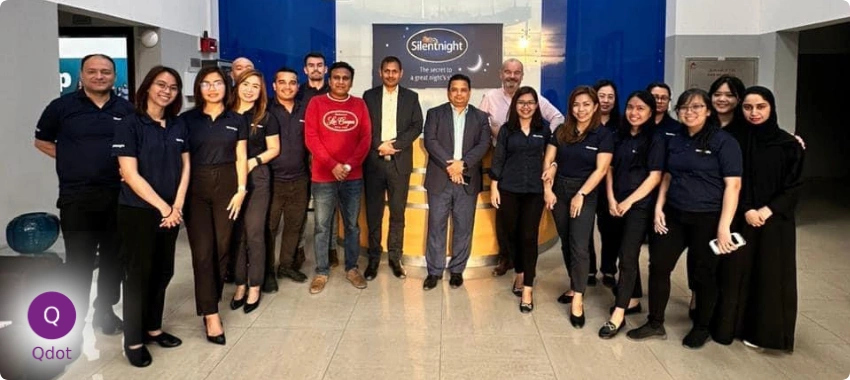
Qdot supports organizations across Saudi Arabia with consultancy, system implementation, documentation, training, internal audit, and certification audit support based on the actual needs of each site and sector.
Cost of ISO consultancy in Saudi Arabia
One of the most common intent searches is the cost of ISO consultancy in Saudi Arabia. There is no single flat price because consultancy cost depends on the actual scope of work. A smaller service company seeking ISO certification for a single office will have a different effort level compared with a multi-site contractor implementing an integrated system. The same applies to food factories, laboratories, healthcare providers, and companies with complex compliance obligations.
The main cost factors usually include:
- selected standard or combination of standards
- size of the organization and number of employees
- number of departments and sites
- current maturity of the management system
- level of documentation already available
- industry complexity and operational risk
- training needs
- travel requirements within Saudi Arabia
- depth of support required during implementation and certification audit
Businesses should be careful not to choose only on the basis of the lowest fee. Low-cost consultancy often leads to template-based documentation, weak implementation, poor staff engagement, and problems during the certification audit or surveillance stage.
How to choose the right ISO consultants in Saudi Arabia
Choosing the right consultancy partner makes a major difference in the outcome of the project. Many businesses compare providers only on price or speed, but a stronger selection method is to look at technical depth, industry understanding, and implementation capability.
Before selecting an ISO certification consultant in Saudi Arabia, it is useful to check:
- experience with your sector and applicable risks
- ability to support multiple standards if needed
- clarity of project methodology and deliverables
- strength in training and staff involvement
- practical internal audit capability
- understanding of documentation without unnecessary complexity
- readiness to support certification audit preparation
- responsiveness, communication, and post-project support
A good consultant should simplify the journey, not complicate it. The system should be understandable to your team, workable in your daily operations, and maintainable after certification.
Why choose Qdot for ISO consultancy in Saudi Arabia
Qdot offers practical, business-focused ISO consultancy in Saudi Arabia for organizations that need more than generic templates. We work to understand the actual activity of the client, then build a system that supports operations, compliance, customer confidence, and certification readiness. Our approach is hands-on, structured, and aligned with implementation realities.
Businesses choose Qdot because we focus on:
- practical gap analysis and realistic implementation planning
- lean documentation that is easier to use and maintain
- support for ISO 9001, ISO 14001, ISO 45001, ISO 22000, HACCP, HALAL, GMP, ISO 27001, ISO 22301, ISO 50001, ISO 55001, ISO 13485, ISO 17020, ISO 17025, SEDEX, CTPAT, Eco Vadis and many other industry specific standards
- staff awareness, internal auditor training, and implementation coaching
- internal audit and management review support
- certification audit support with a clear understanding of project flow
- sector coverage across manufacturing, construction, food, laboratories, healthcare, logistics, and service businesses
- support across Riyadh, Jeddah, Dammam, Jubail, Makkah, Madinah, Yanbu, and other parts of Saudi Arabia
Our objective is not to create a system that only looks good during the audit. We aim to build a management system that remains useful after certification and continues to support business growth.
If your organization is planning for ISO certification in Saudi Arabia and needs a dependable consultancy partner for gap analysis, documentation, training, implementation, internal audit, and certification audit support, Qdot can help you move forward with a clear and practical roadmap.
FAQ's
It is professional support provided to businesses for planning, developing, implementing, and improving management systems so they can meet ISO standard requirements and prepare for certification.
That depends on your activity and objective. ISO 9001 is common for quality, ISO 14001 for environmental management, ISO 45001 for health and safety, ISO 22000 for food safety, ISO 27001 for information security. ISO 22301 for business continuity, ISO 50001 for energy management and ISO 55001 for asset management.
The timeline depends on company size, readiness, and the selected standard. For some businesses it may take a few weeks, while for larger or more complex operations it may take a few months.
Yes. Many businesses in Saudi Arabia implement ISO 9001, ISO 14001, and ISO 45001 together as an integrated management system to improve efficiency and reduce duplication.
No. Effective consultancy should include gap analysis, implementation guidance, training, internal audit, corrective action support, and certification audit preparation, not only documentation.
Yes. Small and medium-sized businesses can benefit significantly from ISO implementation, especially in customer trust, process control, tender readiness, and structured growth.
A consultant helps your company prepare and implement the system. The certification body is an independent organization that audits your system and issues the certificate if requirements are met.
The cost varies according to the standard, size of the company, number of sites, complexity, and level of support required. A proper quotation should be based on actual project scope.
We support businesses across Saudi Arabia, including Riyadh, Jeddah, Dammam, Jubail, Al Khobar, Makkah, Madinah, Yanbu, and other locations based on project needs.
Yes. Training is an important part of implementation, and internal auditor training helps organizations maintain their systems more effectively after certification.