 UAE
UAE
 Qatar
Qatar
 Pakistan
 KSA
KSA
 Oman
Oman
 Kuwait
 Bahrain
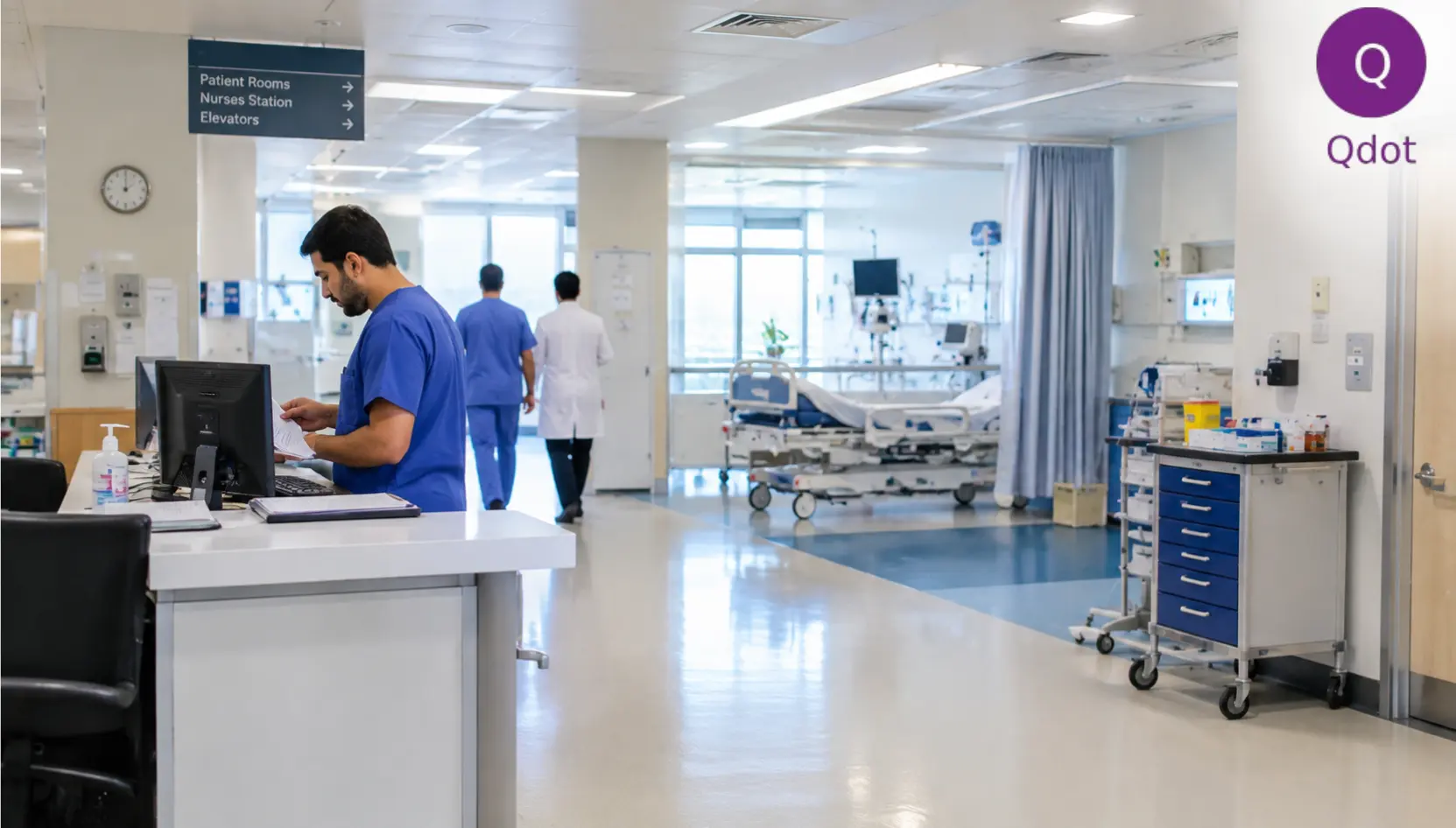
Bahrain's healthcare sector runs on trust. A patient walking into a clinic in Manama, a lab technician reading a blood sample in Muharraq, or a nurse managing a ward at a private hospital, all of them depend on the same thing: consistent, safe, accurate care. ISO certification gives healthcare providers in Bahrain a practical way to build that consistency into daily operations, not just promise it on paper.
Bahrain's Healthcare Sector and Why Quality Standards Matter
Bahrain's healthcare system is a mix of government facilities led by Salmaniya Medical Complex and a growing private sector that includes hospitals such as American Mission Hospital and Royal Bahrain Hospital, along with a wide network of private clinics and diagnostic centres. All of these facilities, public and private, are licensed and inspected by the National Health Regulatory Authority (NHRA), which also maintains a public register of approved facilities and professionals.
Because Bahrain is small and healthcare providers are close together, patients compare experiences quickly. A clinic known for long waits, inconsistent diagnosis, or a data leak will lose patients fast, often to a competitor just a few kilometres away. This makes service quality and patient trust a real business factor, not just a compliance requirement.
What Patients and Regulators Expect From a Healthcare Facility Today
Every healthcare provider in Bahrain, regardless of size, is expected to manage a few things well:
- Accurate diagnosis and safe treatment, every time, not just on a good day
- Clear infection control practices across wards, clinics and labs
- Protection of patient records, especially as more clinics move to digital systems
- Safe working conditions for doctors, nurses and lab staff
- Consistent service across every branch, if the provider operates more than one location
Meeting these expectations informally works for a while. It becomes harder to sustain as staff numbers grow, patient volume increases, or a facility expands into new branches. That is usually the point where a documented management system starts to matter.
Where Hospitals, Clinics and Labs in Bahrain Usually Face Risk
Healthcare risk is different from most other industries because mistakes affect people directly. In Bahrain, the most common risk areas we see are:
| Risk Area | What Can Go Wrong |
|---|---|
| Lab testing | Incorrect results due to poor sample handling or uncalibrated equipment |
| Infection control | Cross contamination between patients or unclear cleaning protocols |
| Patient data | Unauthorised access to medical records, especially in digital systems |
| Staff safety | Needle stick injuries, chemical exposure, or lack of protective procedure |
| Multi branch consistency | One clinic performs well while another falls short on the same standard |
None of these risks are unusual. What separates well run providers from the rest is whether these risks are managed through a system, or left to individual staff judgement.
ISO Standards That Fit Bahrain's Healthcare and Diagnostic Sector
Not every ISO standard applies to healthcare. The ones below are the ones that genuinely match how hospitals, clinics and labs operate in Bahrain.
- ISO 9001, Quality Management – Helps a hospital or clinic run its daily operations in a consistent way, from patient registration to discharge. It matters in Bahrain because providers with more than one branch need every location to deliver the same standard of care. Qdot supports this through gap assessment, documentation and staff training built around real patient workflows, not generic templates.
- ISO 15189, Medical Laboratories – Explained in detail below, this is the most important standard for diagnostic and laboratory work.
- ISO 45001, Occupational Health and Safety – Covers the safety of doctors, nurses, lab technicians and support staff. It matters because healthcare workers face daily exposure to biological and chemical hazards. Qdot helps facilities build safety procedures that hold up during real shifts, not just during an audit.
- ISO 27001, Information Security Management – Protects patient records, lab results and billing information, particularly as Bahrain clinics adopt more digital health record systems. Qdot helps identify where patient data is most exposed and builds practical controls around it.
- ISO 14001, Environmental Management – Relevant for facilities managing medical waste, sharps disposal and chemical handling. Qdot supports this mainly for hospitals and larger diagnostic centres with higher waste volumes.
ISO 15189 for Medical Laboratories and Diagnostic Centres
Laboratory accuracy is where healthcare quality is tested the most directly. A wrong result does not just affect one patient, it can affect a diagnosis, a treatment plan, or a referral decision made by another doctor who trusts that result.
ISO 15189 focuses on:
- Correct handling of samples from collection to testing
- Proper calibration and maintenance of lab equipment
- Staff competence, so results do not depend on which technician is on duty
- Clear records that can be traced back if a result is questioned
For diagnostic centres and hospital labs in Bahrain, this standard is often the difference between being seen as a reliable referral point or a facility doctors double check before trusting. Qdot works with labs on gap assessment, equipment and process documentation, staff competency records and internal audit preparation ahead of certification.
How ISO Certification Supports Your NHRA Licence and Inspections
ISO certification does not replace NHRA licensing. NHRA remains the legal authority that licenses and inspects every hospital, clinic, lab and pharmacy in Bahrain. What ISO certification does is give a facility a documented, repeatable system that naturally supports what NHRA inspectors look for, such as clear procedures, trained staff, proper records and consistent patient safety practices. Providers with an ISO system in place usually walk into inspections better prepared, simply because the documentation and routines already exist.
How Qdot Supports Your Certification Journey
Qdot works as an ISO consultancy and implementation partner, not a certification body. Our role is to prepare your facility properly before certification.
- Gap assessment, reviewing current practices against the chosen ISO standard
- Documentation support, building procedures that match how your facility actually works
- Staff training, so quality and safety practices are understood, not just written down
- Internal audit support, testing the system before the real certification audit
- Certification preparation, making sure the facility is ready when the certification body visits
This applies whether you run a single clinic, a multi branch group, or a diagnostic laboratory.
If you run a hospital, clinic, diagnostic centre or medical laboratory in Bahrain and want to understand which ISO standard fits your operation, Qdot can walk through your current setup and recommend a practical starting point.
FAQs
No. NHRA licensing is a legal requirement for operating in Bahrain. ISO certification is a separate, voluntary system that supports quality and safety, and often makes NHRA inspections easier to pass.
ISO 15189 is usually the right starting point, since it is built specifically for medical laboratory testing and accuracy.
If the clinic stores patient records digitally, even in a basic system, ISO 27001 becomes relevant. The size of the facility matters less than how much patient data it holds.
A single clinic can often prepare for certification in a few months. A hospital or multi branch group with more staff and processes typically needs longer, depending on how ready the current systems are.
Yes. Qdot builds systems that work consistently across branches, so every location meets the same standard rather than treating each clinic separately.