 UAE
UAE
 Qatar
Qatar
 Pakistan
 KSA
KSA
 Oman
Oman
 Kuwait
 Bahrain
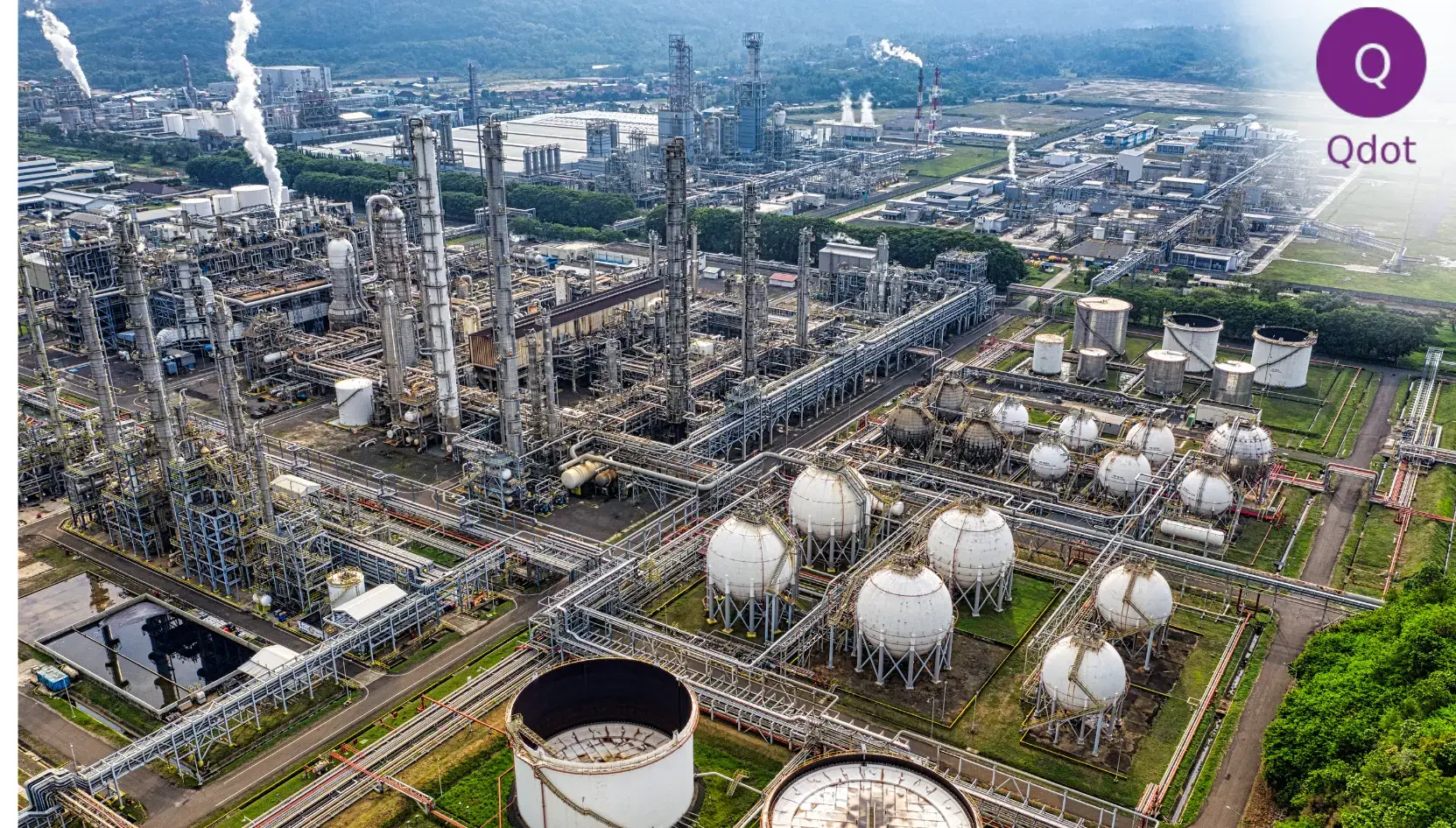
Bahrain's industrial sector runs on heavy, precise, and often hazardous processes. Whether you run a metal fabrication workshop, supply parts to a smelter, process food, or manufacture pharmaceutical products, buyers and regulators expect proof that your quality, safety, and environmental systems actually work. Qdot helps manufacturing and industrial businesses in Bahrain build that proof through practical ISO implementation, not paperwork for its own sake.
Bahrain's Factory Floor: From Alba to Food Processing Plants
Manufacturing is one of the largest contributors to Bahrain's non-oil economy, and aluminium sits at the centre of it. Aluminium Bahrain (Alba) is one of the world's biggest single-site smelters, and it feeds a wider downstream industry that includes cable makers, rolling mills, and component suppliers. Alongside aluminium, Bahrain has a well-established petrochemical base, led by GPIC's ammonia and methanol production and Bapco Refining's operations at Sitra.
Beyond these anchor industries, Bahrain has been actively growing food manufacturing, pharmaceuticals, and fast-moving consumer goods, with production spread across industrial zones such as Hidd, Salman Industrial City, and the Bahrain International Investment Park. The Ministry of Industry, Commerce and Tourism oversees industrial licensing and activity, and government programmes through Tamkeen support local manufacturers in raising their technical and quality standards.
Bahrain's industrial base at a glance:
- Aluminium is Bahrain's largest non-oil export
- Petrochemicals (ammonia, methanol, urea) form the second-largest industrial segment
- Food, pharmaceuticals, and FMCG are priority growth sectors under national diversification plans
- Industrial and free zones offer investor incentives but also carry compliance obligations
The Everyday Risks That Cost Bahrain Manufacturers Money
Most quality and safety problems in a factory do not show up as one big disaster. They show up as small, repeated losses that add up.
- Product batches rejected or reworked due to inconsistent quality control
- Downtime or injuries from poorly controlled high-heat, high-pressure, or chemical processes
- Rising electricity costs in energy-heavy processes like smelting and chemical production
- Environmental non-compliance findings during inspections or permit renewals
- Losing tender opportunities because a buyer requires ISO certification you don't have
- Food or pharmaceutical products failing hygiene or traceability checks before export
None of these are unusual. They are the normal cost of running a plant without a structured management system.
Why Big Plants Only Buy From ISO Certified Suppliers
This is one of the most practical reasons Bahrain manufacturers pursue ISO certification. Large industrial buyers such as Alba, GPIC, and Bapco, along with major contractors on infrastructure projects, routinely require suppliers and subcontractors to hold ISO 9001, ISO 14001, or ISO 45001 before they can even bid. It is a standard part of vendor prequalification.
For a smaller manufacturer or workshop, this means certification is not just a quality improvement exercise. It is the difference between qualifying for a supply contract and being excluded from the tender list entirely. Companies that leave certification until a deadline is already on the table usually rush the process and end up with weak documentation that does not hold up at audit.
Which ISO Standard Fits Your Operation
Different parts of Bahrain's industrial sector need different combinations of standards. The table below shows where each one applies.
| Standard | What It Does | Who Needs It Most |
|---|---|---|
| ISO 9001 | Builds consistent quality control and reduces rejected batches | All manufacturers, especially metal and component suppliers |
| ISO 14001 | Manages emissions, waste, and resource use | Aluminium, petrochemical, and other heavy industry |
| ISO 45001 | Reduces workplace injuries and controls process hazards | Smelters, refineries, and high-risk production sites |
| ISO 22000 / FSSC 22000 | Manages food safety, hygiene, and traceability | Food and beverage manufacturers, exporters |
| ISO 50001 | Controls and reduces energy use | Energy-intensive plants (aluminium, petrochemicals) |
Most manufacturers do not need every standard at once. Qdot helps you decide the right starting point based on your buyers' requirements, your risk profile, and your certification budget.
Environmental Compliance Without the Guesswork
Industrial activity in Bahrain is subject to environmental permits and inspections, particularly around emissions, effluent discharge, and hazardous waste handling. Many manufacturers already meet these requirements informally but struggle to produce consistent records when an inspector or client asks for them.
ISO 14001 does not replace Bahrain's environmental regulations. It gives you a structured way to document what you already do, correct the gaps, and show auditors and regulators a clear paper trail instead of scattered files and verbal assurances.
Food and Pharmaceutical Manufacturers Have Extra Rules
Food and pharmaceutical production in Bahrain carries additional expectations around hygiene, batch traceability, and product safety, especially for companies exporting into other GCC markets. ISO 22000 (or the retailer-preferred FSSC 22000) covers food safety hazards from raw material intake through to finished product, while a tightly built ISO 9001 quality system supports pharmaceutical manufacturers with document control, calibration records, and traceability that align with good manufacturing practice expectations.
Quick check for food and pharma producers:
- Can you trace any finished product back to its raw material batch within minutes?
- Are hygiene and hazard control points documented, not just practised?
- Would your calibration and batch records survive a surprise audit?
If the answer to any of these is no, a certification gap assessment is the right starting point.
Getting Your Plant Certification Ready
- Gap assessment. Qdot reviews your current processes against the standard you need and identifies what's missing.
- Documentation support. We help you build practical procedures and records that match how your plant actually operates, not generic templates.
- Staff training. Operators, supervisors, and quality teams learn what the standard requires of them day to day.
- Internal audit support. We run a mock audit before the real one, so surprises are caught early.
- Certification body coordination. We prepare you for the external audit and support corrective actions if needed.
Ready to find out which ISO standard fits your plant? Get in touch with Qdot for a straightforward gap assessment.
Frequently Asked Questions
Most manufacturing plants complete implementation and certification within two to four months, depending on how developed their existing quality processes are.
An environmental permit confirms you meet regulatory limits. ISO 14001 builds the management system behind it, so you can consistently prove compliance and catch issues before they become violations.
Yes. We can prioritise the documentation and readiness work needed to meet a tender timeline, though rushed certification still requires the underlying processes to be genuinely in place.
It is not a government mandate for every food business, but it is increasingly required by retailers, distributors, and export markets as a condition of doing business.