 UAE
UAE
 Qatar
Qatar
 Pakistan
 KSA
KSA
 Oman
Oman
 Kuwait
 Bahrain
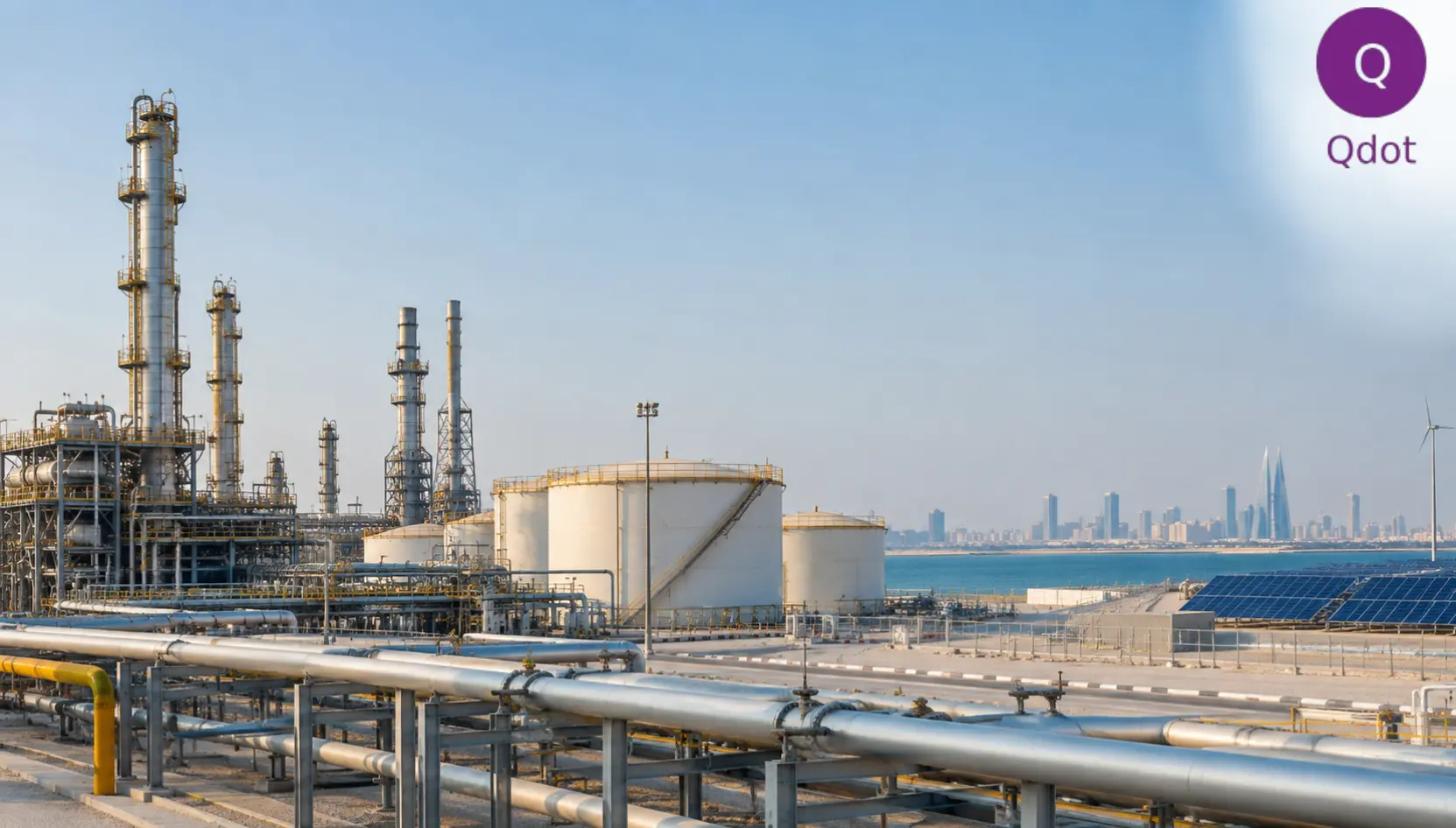
Bahrain's Oil, Gas and Power Sector at a Glance
Bahrain was the first place in the Gulf to strike oil, back in 1932 at Jebel Dukhan. Today the country produces far less crude than its neighbours, but it still runs one of the region's busiest refining and gas processing operations, and its power and water sector is moving quickly toward renewables. For companies operating in or supplying this sector, from refinery contractors to solar installers, ISO certification has become a normal way to show operators, EWA and main contractors that safety, quality and environmental systems are properly in place.
A Small Producer With a Big Refining Role
Bahrain's own fields, mainly the onshore Bahrain Field operated by Tatweer Petroleum and a share of the offshore Abu Saafa field, produce modest volumes compared with Saudi Arabia or Qatar. A 2018 offshore discovery in the Khalij al Bahrain Basin pointed to further potential, though it is still being appraised. What really defines the industry here is downstream capacity. The Sitra refinery, run by Bapco and opened in 1936, is the oldest in the Gulf, and it is now going through the Bapco Modernisation Programme, a major project adding new processing units and substations to lift capacity toward 400,000 barrels a day.
Quick facts:
- Sitra refinery opened in 1936, the oldest in the Gulf region
- Bapco Modernisation Programme adds 21 new processing units and 15 substations
- Bahrain targets net zero carbon emissions by 2060
- National plan targets 20 percent renewable electricity by 2035
The Companies That Make Up This Industry
- Upstream and gas supply: Tatweer Petroleum runs the Bahrain Field and supplies gas to power stations
- Refining and storage: Bapco operates the Sitra refinery, storage tanks and marine export terminals
- Gas processing: Banagas and Tawseah process associated and natural gas into LPG and other products
- Petrochemicals: GPIC, jointly owned with Saudi Arabia's SABIC and Kuwait's PIC, produces ammonia, methanol and urea
- Fuel supply and import: Bahrain LNG's import terminal, BAFCO and BJFCO handle aviation and marine fuel alongside Bahrain Gasoline Blending
- Power and water: EWA generates and distributes electricity and runs desalination for the whole country
- Renewable energy: utility scale solar such as the planned plant near Bilaj Al Jazayer, plus rooftop systems on EWA's own facilities
- Marine support: ASRY provides repair and maintenance for tankers and other vessels serving the industry
Operational Risks That Come With This Work
- Process safety: refining, gas processing and petrochemical sites carry real fire, explosion and toxic release risks, and this grows when modernisation work brings extra contractors onto a live site
- Ageing assets under upgrade: keeping a refinery built in the 1930s reliable while adding dozens of new units at once calls for disciplined maintenance and asset planning
- Environmental compliance: emissions, waste, produced water and flaring are regulated by the Supreme Council for Environment, and gaps can affect permits and reputation
- Energy and emissions pressure: the national net zero 2060 and 20 percent renewables by 2035 targets are pushing large energy users to measure and reduce consumption
- Supply continuity: a disruption at Sitra, the LNG terminal or the national grid has an immediate effect on fuel and power supply across the country
- Growing automation: refinery control rooms and EWA's smart grid and solar monitoring depend more on connected systems that need protecting from failure or interference
ISO Standards That Fit Bahrain's Oil, Gas and Energy Companies
Not every company in this sector needs the same certification. What fits best usually depends on whether you operate a plant, supply equipment, run a construction contract, or provide a support service.
| Standard | What It Covers | Why It Matters Here |
|---|---|---|
| ISO 9001 | Quality management | The starting point most operators and EPC contractors expect before adding a supplier to their vendor list |
| ISO 14001 | Environmental management | Structures how emissions, waste and spill risk are controlled, matching Supreme Council for Environment expectations |
| ISO 45001 | Occupational health and safety | Closely checked for site access at refining, gas processing and petrochemical facilities where hazards are high |
| ISO 50001 | Energy management | Helps refineries, gas plants and utilities track and cut energy use, supporting Bahrain's net zero and renewables targets |
| ISO 55001 | Asset management | Useful for ageing, high value infrastructure such as the Sitra refinery and the power grid, keeping maintenance planning structured through the modernisation period |
| ISO 29001 | Petroleum, petrochemical and gas sector quality management | Adds traceability and reliability on top of ISO 9001, built for companies supplying equipment into GPIC, Bapco or similar supply chains |
As refinery and grid systems become more connected, some companies also look at ISO 27001 for information security, particularly where they handle operator data or link into control systems.
Steps Qdot Takes to Get You Certification Ready
- Gap review: we check current practices against the standard you need, usually ISO 9001, 14001 and 45001 together, with ISO 50001, 55001 or 29001 added where relevant
- Documentation and risk registers: we help build procedures and records your team will actually use
- Training: staff and site supervisors learn what the standard expects of them day to day
- Internal audit: a practice audit so issues are found and fixed before the real one
- Certification support: we prepare you for the audit carried out by an independent, accredited certification body. Qdot provides consultancy and implementation support, not the certificate itself
If your business operates in, supplies or services Bahrain's oil, gas or energy sector, Qdot can help you work out which ISO standards fit and prepare your team for certification.
FAQs
It is not a legal requirement, but certified quality, safety and environmental systems are commonly expected during vendor approval and tendering, especially for site based work tied to the Bapco Modernisation Programme.
Only if asset reliability is central to your work, such as maintaining refinery or grid equipment. Many contractors manage well with 9001 and 45001 alone.
Yes. ISO 9001, 14001 and 45001 apply to renewable energy contractors the same way they do to traditional oil and gas suppliers, and certification is increasingly expected as EWA's solar programme grows.
Most start with ISO 9001 and ISO 45001, since site access and safety compliance matter more than technical traceability at this scale.
It gives a structured way to measure and reduce energy use, which is exactly what large energy consumers need to show progress against the 2060 net zero and 2035 renewables targets.