 UAE
UAE
 Qatar
Qatar
 Pakistan
 KSA
KSA
 Oman
Oman
 Kuwait
 Bahrain
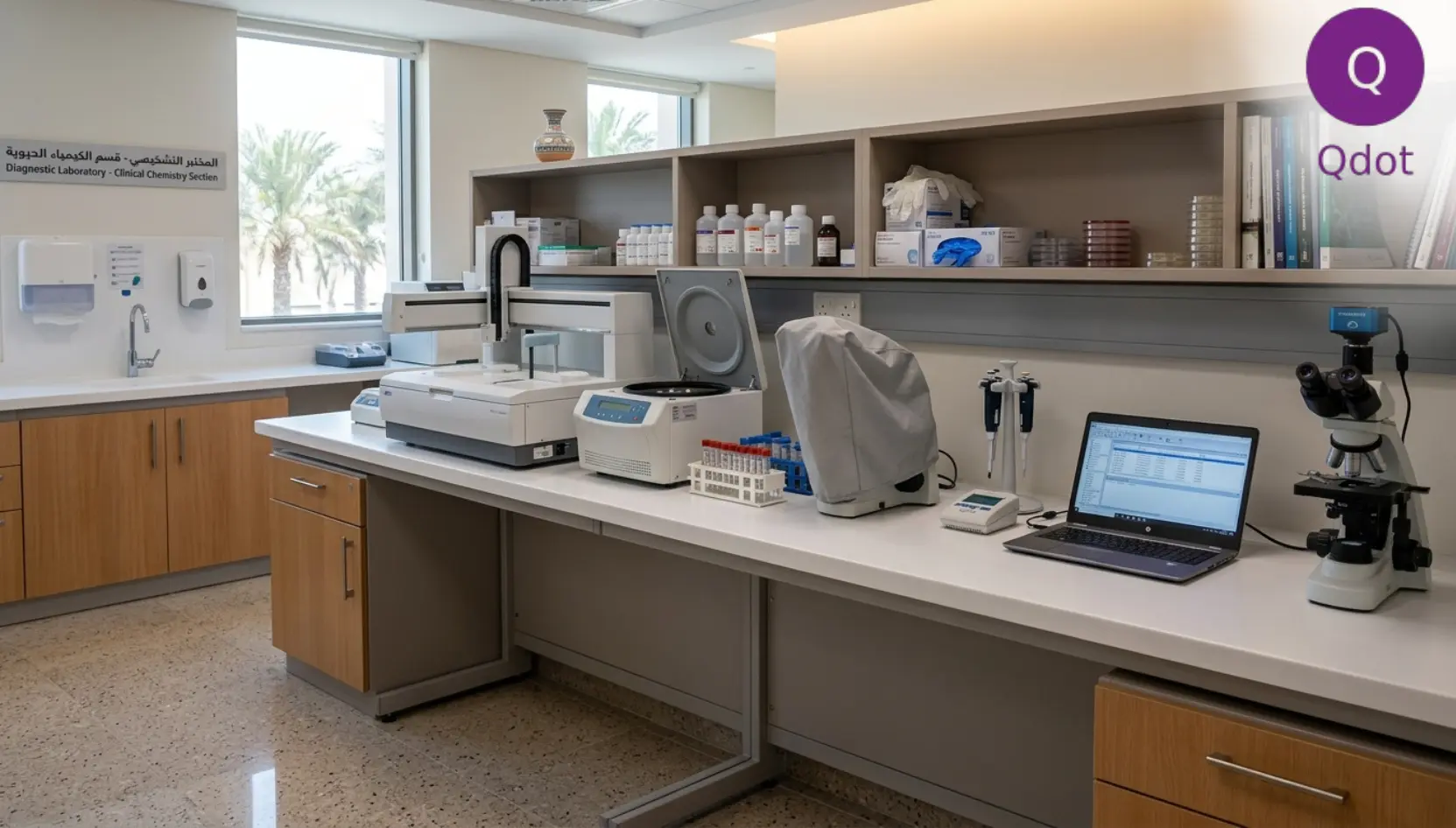
Oman's healthcare sector runs on two tracks that increasingly meet in the middle: a large Ministry of Health (MoH) network of hospitals and health centres, and a fast-growing private sector of hospitals, clinics and diagnostic labs across Muscat, Sohar and Duqm. Either way, the same question comes up from patients, insurers and referring doctors: can this facility be trusted to deliver consistent, accurate care?
ISO standards don't replace what MoH already requires. What they add is a documented management system that backs up the licence and any accreditation with day to day process control, something that matters more as Oman's private hospitals, clinics and diagnostic labs grow and, in some cases, look to attract patients from outside the country.
Where This Applies: Hospitals, Clinics and Diagnostic Labs Across Oman
This page is written for:
- General and specialty hospitals, public and private
- Polyclinics, dental clinics, optical outlets and specialty outpatient centres
- Diagnostic, pathology and clinical laboratories, including standalone testing and sample collection centres
- Home healthcare and mobile sample collection services
- Laboratories running testing linked to healthcare that isn't direct patient diagnosis, such as calibration or hygiene testing
Most of the largest referral and teaching hospitals sit in Muscat, but new private hospital projects have also been announced for Sohar and Duqm, alongside a steady rise in standalone diagnostic labs and clinic chains. Oman's public health laboratories already carry international recognition too: the WHO named the Central Public Health Laboratories a collaborating centre for emerging infectious diseases, the first such recognition in the Middle East. It's a useful reminder of what laboratory competence delivers when it's built into daily operations rather than treated as paperwork.
MoH Licensing, National Accreditation and Where ISO Fits In
Every hospital, clinic and lab in Oman needs an MoH facility licence before it can operate. Oman's new Public Health Law, issued under Royal Decree 43/2025, goes further: healthcare institutions must now obtain and maintain accreditation through a system the Ministry of Health is developing, building on its existing Oman Healthcare Accreditation System.
Laboratories sit under a second layer. Oman Accreditation Centre (OAC), the country's national accreditation body under the Ministry of Commerce, Industry and Investment Promotion, currently accredits testing laboratories against ISO/IEC 17025 and is working toward wider regional recognition of that scheme. Separately, Oman's national standards authority adopted ISO 15189, the international standard for medical laboratory quality and competence, as the Omani Standard OS GSO ISO 15189:2024 in October 2024.
ISO certification through an independent certification body sits alongside all of this rather than replacing it. It gives a facility a documented, auditable management system, useful groundwork whether you're preparing for MoH accreditation, OAC accreditation, an insurer's audit, or simply a steadier way of running daily operations.
Which ISO Standards Apply to Hospitals, Clinics and Labs
| Standard | Who it's for | Why it matters in Oman |
|---|---|---|
| ISO 9001 | Hospitals, clinics, polyclinics | Documents patient service processes, complaint handling and consistency, often requested by insurers and corporate clients |
| ISO 7101 | Hospitals and larger clinic groups | A dedicated healthcare quality management standard built around patient safety and people centred care, in step with MoH's own accreditation direction |
| ISO 15189 | Medical, diagnostic and pathology labs | Covers the competence and reliability of tests run on patient samples, matching the standard Oman has now adopted nationally |
| ISO/IEC 17025 | Independent testing and calibration labs, equipment calibration services | Competence for testing work outside direct patient diagnosis, the same standard OAC already uses for laboratory accreditation |
| ISO 45001 | Hospitals, clinics, labs | Manages staff safety risks specific to clinical settings: needlesticks, biohazards, radiology and lab chemicals |
| ISO 27001 | Hospitals, clinics and diagnostic centres using digital records | Protects patient data and health information as more facilities move to electronic records |
ISO 15189 or ISO/IEC 17025: Picking the Right Lab Standard
This is where a lot of labs get confused. ISO 15189 is built for labs testing patient samples for diagnosis: blood work, pathology, microbiology and similar. ISO/IEC 17025 is for labs doing other kinds of testing or calibration, not tied to a patient result. A lab doing both may eventually need to work toward both standards, depending on its full scope of testing.
What Slows Down ISO Readiness in Oman's Healthcare Facilities
- Infection control and hygiene practices that exist in daily routine but were never written down as controlled procedures
- Patient files and lab results split across paper records and more than one software system, with no single controlled version
- Calibration and maintenance logs for lab instruments and diagnostic machines kept informally, if at all
- No internal audit programme, so gaps surface at an MoH inspection or after a complaint rather than before
- Multiple clinics or lab branches under one group, each following its own version of a procedure
- Frequent turnover among expatriate clinical and lab staff, with induction and retraining not built into a repeatable system
How Qdot Supports Hospitals, Clinics and Labs in Oman
Qdot is an ISO consultancy, not a certification or accreditation body. The certificate or accreditation itself comes from MoH, OAC or an independent certification body once your facility is ready. Our work is getting you there:
- Gap analysis against the ISO standard, or standards, relevant to your facility
- Documentation built around real patient flow, lab workflow and department structure, not generic templates
- Role based training for clinical, laboratory and administrative staff
- Internal audit support, so problems surface internally before an external audit finds them
- Support preparing for the certification or accreditation audit, with continued help through later surveillance audits
Talk to Qdot About Your Facility
If you run a hospital, clinic or laboratory anywhere in Oman and want to know which ISO standard actually fits your operation, Qdot can walk you through a gap analysis and a practical plan from there. See our full ISO consultancy services in Oman, or reach out for a quick assessment.
FAQs
No. MoH facility licensing, and the accreditation required under Royal Decree 43/2025, are mandatory. ISO certification is voluntary, though many insurers, corporate clients and referring hospitals ask for it.
ISO 15189 applies to labs testing patient samples for diagnosis. ISO/IEC 17025 applies to general testing and calibration work not tied to a patient result. Some labs need both, depending on what they test.
No. They are separate systems. A documented ISO management system supports accreditation readiness, but the accreditation decision itself sits with the Ministry of Health's own national system.
Most clinics start with ISO 9001 for overall service quality. A lab handling patient samples for diagnosis typically needs ISO 15189 as its core standard.
Our role is ISO consultancy. Where a documented ISO management system overlaps with what MoH's accreditation system expects, our documentation and internal audit work supports both, but the accreditation decision itself remains with the relevant health authority.