 UAE
UAE
 Qatar
Qatar
 Pakistan
 KSA
KSA
 Oman
Oman
 Kuwait
 Bahrain
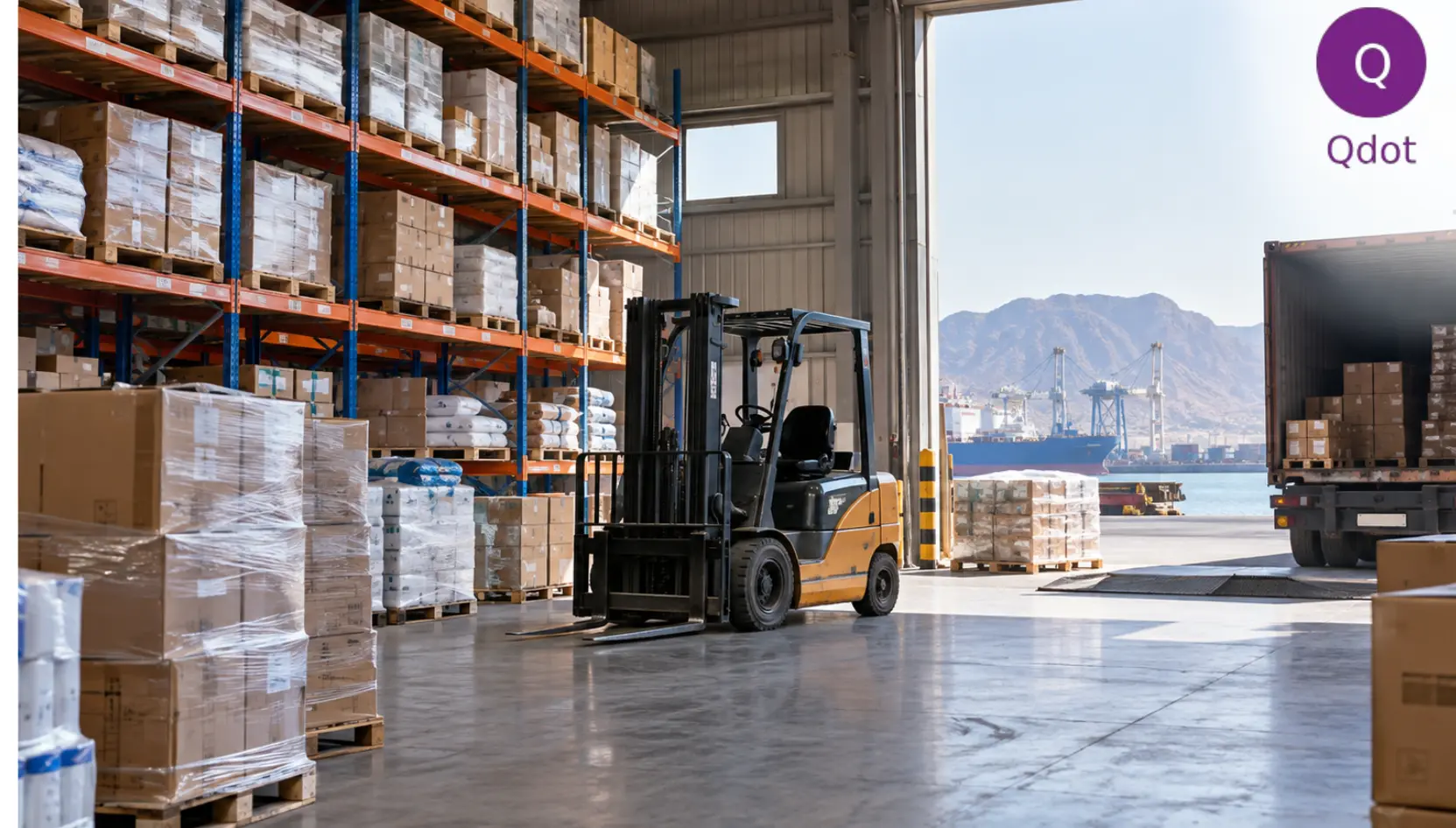
Importers, Wholesalers and Distributors in Oman
Oman's trading and distribution sector moves everything from packaged food to construction materials, medical consumables to spare parts, between the port, the warehouse and the shelf. Whether you import directly, hold an exclusive agency for an international brand, or supply retailers and contractors from a warehouse in Rusayl or Ghala, the pressure points look similar: clearing customs without delays, proving product conformity, and keeping quality consistent across suppliers you don't control. A handful of ISO standards address these pressure points directly, more usefully than others.
Where Oman's Trading and Distribution Business Happens
Most imports reach Oman through the Port of Sohar, roughly two hours from Muscat by road, making it the country's main gateway for goods coming in from abroad. Salalah works differently. Its port and free zone are built around transshipment and re-export, and by mid-2025 more than half of the Salalah Free Zone's area was already occupied and 87 percent of its warehouse space was leased, spread across pharmaceuticals, food processing, logistics and marine services. Duqm's Special Economic Zone is newer and leans toward bulk cargo and heavy industry supply chains, while Al Mazunah Free Zone, on the Yemen border, handles smaller-scale cross-border trade.
Inland, wholesale and distribution activity clusters around Muscat's industrial estates, particularly Rusayl and Ghala, where importers keep stock close to the capital's retail and construction demand, with regional centres like Nizwa and Sur feeding surrounding markets.
What This Industry Covers in Oman
This page is written for businesses such as:
- Food, beverage and FMCG importers and distributors supplying supermarkets, hotels and restaurants
- Building material and hardware wholesalers supplying contractors and retailers
- Medical consumable and pharmaceutical distributors, a segment growing alongside Oman's hospital building programme
- Electrical, electronics and appliance importers
- Industrial spare parts, machinery and equipment suppliers
- General trading companies holding agencies for several international brands at once
Many of these companies act as the exclusive local agent for a foreign principal. That arrangement means the brand owner is watching more than sales numbers. They expect documented ordering, complaint handling and stock control, which is exactly the ground a quality management system is built to cover.
Product Conformity Rules Are Getting Stricter
Standards, testing and conformity assessment for goods sold in Oman sit with the Directorate General of Specifications and Metrology (DGSM), part of the Ministry of Commerce, Industry and Investment Promotion. Since 2022, a growing list of imported product categories, including electrical appliances, gas appliances, paints, building materials, ceramics, pumps, machinery, batteries, spare parts, protective equipment, textiles and cosmetics, has needed a Certificate of Conformity cleared through the Bayan customs system before it can be sold.
From March 2026, the Omani Quality Mark became compulsory for products entering the Sultanate, and getting it now involves factory audits and laboratory testing rather than a one-off shipment check, with coverage expanding into construction materials, edible oils, sugar products and bottled water. The mark exists specifically to confirm that manufacturers run proper quality management systems across production, not just that a single batch passed inspection.
For distributors, this matters practically. Importers who already run ISO 9001, or who require it from overseas suppliers, tend to move through these conformity checks faster, because the documentation these audits ask for is already part of how they work.
Customs Clearance and Supply Chain Security
Oman's Authorised Economic Operator (AEO) programme, run by the Directorate General of Customs at the Royal Oman Police, is aimed at importers, exporters, freight forwarders, warehouse operators, customs agents and transport carriers, offering faster clearance and fewer inspections to companies that qualify. Early AEO recipients included well known trading and shipping names such as Khimji Ramdas Shipping and Octal, and in January 2026 oilfield services provider ABRAJ Energy Services became the latest company awarded AEO status after a review of its supply chain compliance record.
AEO assessments look closely at how a company controls cargo, warehouse access and documentation, which is the same ground covered by ISO 28000, the supply chain security management standard. Distributors and freight-handling businesses working toward AEO status often find a structured ISO 28000 system gives them ready-made evidence for the application, rather than having to build that case from scratch.
Keeping Quality Consistent Across Suppliers You Don't Control
A distributor rarely manufactures anything. The real quality risk sits elsewhere: goods arriving from several suppliers, sometimes several countries, where one weak link (a late shipment, a batch that doesn't match spec, a warehouse mix-up) reflects on the distributor's name, not the factory's.
ISO 9001 gives a documented way to handle supplier evaluation, incoming goods checks, complaint handling and traceability. It is also the kind of evidence both the Omani Quality Mark process and demanding brand principals expect to see.
Food, beverage and pharmaceutical distributors carry extra risk around cold chain, shelf life and contamination, which is where ISO 22000 becomes relevant, particularly for companies supplying supermarkets, hotels or hospitals. Businesses running larger warehouses and delivery fleets also deal with everyday risks around forklifts, racking and loading bays, which ISO 45001 is built to manage.
Operational Risks Facing Oman's Importers and Distributors
Before conformity certificates and customs paperwork even enter the picture, most trading businesses in Oman are already managing risks that sit outside their control.
- Shipping routes have become unpredictable. When Iran disrupted traffic through the Strait of Hormuz in early 2026, ship calls at Sohar jumped by roughly 40 percent within weeks as vessels rerouted through Oman instead. Salalah had already seen its container volumes drop by close to a fifth back in 2024, when Red Sea attacks forced ships around Africa. A business planning stock around a single port or a single shipping route is exposed to delays it can't predict or negotiate its way out of.
- Free zones cut both ways. Oman's free zones exist for re-export and transshipment, which is good for logistics but creates a real problem for exclusive distributors: the same branded stock can re-enter the local market through informal or parallel channels, undercutting authorised pricing and warranty support.
- Gulf heat is not a neutral storage condition. Food, pharmaceuticals and some electronics lose shelf life or performance quickly without active temperature and humidity control, and poor storage is one of the most common causes of stock write-offs and customer complaints.
- Omanisation compliance is tightening. Wholesale and retail trade carries a lower quota than sectors like banking or transport, with roughly a fifth of staff expected to be Omani nationals. But enforcement is getting stricter: companies bidding for government contracts have until the end of May 2026 to meet their sector quota or risk losing eligibility, which affects hiring and training plans for warehouse and sales teams.
- Paperwork gaps still cause the most avoidable delays. A missing conformity certificate, an expired agency registration, or shipment documents that don't quite match the cargo remain the most common reasons stock gets held at the port instead of reaching the warehouse on schedule.
None of this is solved by certification on its own. But a documented, risk-aware way of working, which is what ISO 9001 and ISO 28000 are built around, gives a business a better chance of catching these problems before they turn into a stalled shipment or a lost customer.
Which ISO Standards Actually Fit Your Business
| Standard | Covers | Why it fits trading and distribution in Oman |
|---|---|---|
| ISO 9001 | Quality management | Supplier control, complaint handling, documentation that supports Omani Quality Mark and conformity checks |
| ISO 28000 | Supply chain security | Cargo and warehouse security, strengthens AEO applications with Oman Customs |
| ISO 22000 | Food safety management | For food, beverage and pharmaceutical importers and distributors |
| ISO 45001 | Occupational health and safety | Warehouse, loading bay and delivery fleet safety |
Most trading companies don't need all four. A general hardware wholesaler may only need ISO 9001. A food importer clearing through Sohar and holding cold storage in Ghala is a stronger candidate for ISO 9001 alongside ISO 22000.
ISO Implementation Support for Oman's Trading and Distribution Companies
Qdot works with importers, wholesalers and distributors across Muscat, Sohar and the southern free zones to build management systems around how a trading business actually operates, not a manufacturing template borrowed from elsewhere. That starts with a gap analysis against your current supplier, warehouse and customs documentation, moves into building the ISO 9001, ISO 28000, ISO 22000 or ISO 45001 system around processes your team can realistically maintain, and finishes with preparing staff for the certification audit itself.
FAQs
No, they are separate schemes. But an existing ISO 9001 system covers much of the documentation the DGSM's factory audit and conformity process ask for, which usually shortens the process.
No. AEO is a customs programme run by Royal Oman Police, not an ISO standard. ISO 28000 doesn't substitute for the application, but a working system gives you structured evidence to support it.
It isn't legally mandatory for most trading activity. It becomes important when a principal, a large retailer, or a government tender specifically asks for it, or when your own supplier and complaint records need tightening up.
Usually ISO 9001 first, since it covers the broader supplier and documentation base, with ISO 22000 added where cold chain, shelf life or hygiene risk is significant.