 UAE
UAE
 Qatar
Qatar
 Pakistan
 KSA
KSA
 Oman
Oman
 Kuwait
 Bahrain
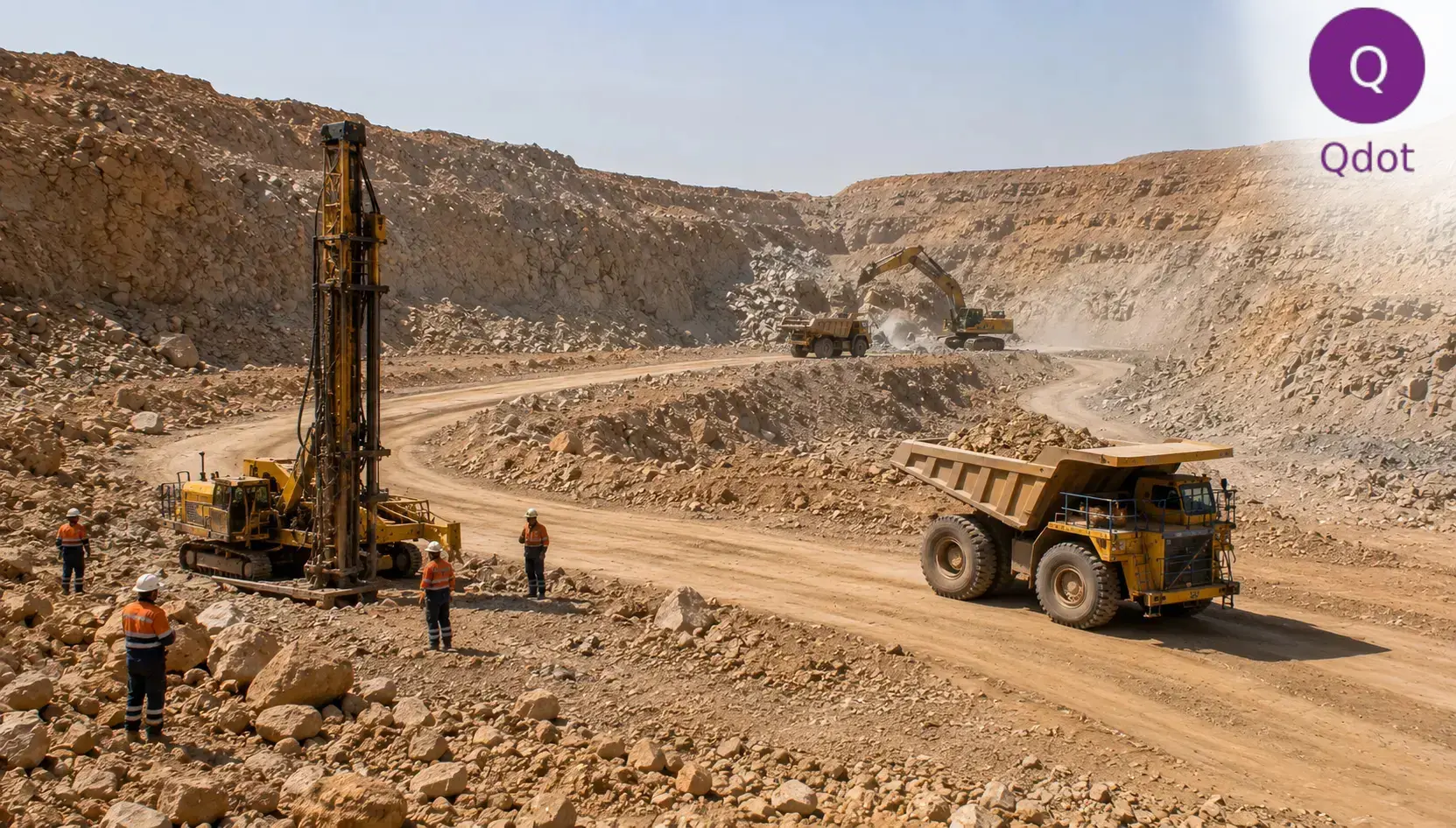
Mining and Minerals in Oman
Oman's mountains have been mined for copper since the Bronze Age, and the sector now sits at the centre of Vision 2040's push to reduce reliance on oil revenue. Copper exports have restarted from Sohar after a 30-year pause, new copper and chromite concessions have opened in Al Buraimi and Al Sharqiyah North, and Oman was the first Gulf country to produce and export ferrochrome. Alongside this, the sector still runs on aggregate, gypsum, limestone and dolomite, the everyday materials behind cement, roads and buildings.
That means two different sets of people to satisfy. International buyers want consistent ore grade and traceable quality records. Regulators, communities and site inspectors want proof of safe, environmentally sound operations. ISO certification is the practical way mining and quarrying companies in Oman show both.
Oman's Mining and Quarrying Sector at a Glance
The Ministry of Energy and Minerals oversees the sector under the Mineral Wealth Law, issuing exploration and mining concessions much like oil and gas blocks. State-backed Minerals Development Oman (MDO) holds many of the larger concessions and is redeveloping historic copper mines such as Lasail near Sohar and Al-Baydha in Liwa, alongside newer projects in titanium dioxide and industrial minerals.
Locations worth knowing:
- Sohar and Yanqul: copper concentrating and processing, including the Mazoon Copper project
- Ibri: an industrial city dedicated to mining, quarrying and oilfield services
- Duqm Special Economic Zone: port access for exporting copper, gypsum and chromite
- Dhofar (Salalah area): gypsum quarrying and export, mostly to India, plus a new dedicated minerals port planned at Al Shuwaymiyah
- Rusayl and estates near Muscat: limestone quarries feeding Oman's cement plants
Metal Mining and Mineral Processing
Metallic mining in Oman centres on copper, chromite, gold, silver and manganese, drawn from the ophiolite rock running through the Al Hajar mountains. Ore is crushed, concentrated and sometimes processed further on site before being trucked to port. Buyers are usually overseas smelters and traders working to a required grade and purity, and they reject or reprice shipments that fall outside it.
Quarrying and Industrial Minerals
Non-metallic quarrying covers limestone, gypsum, dolomite, marble, silica and clay, used mainly in cement, construction aggregate, glass and chemicals. Much of it ties directly to local cement production, with major producers running their own limestone quarries near Muscat and Salalah. Gypsum is a significant export in its own right, valued for its purity and shipped in large volumes, mostly to India.
Dust, Blasting and Heavy Vehicles: The Main Safety Risks
Site safety is where this sector differs most from other industries. Common hazards include:
- Airborne dust and silica from crushing, screening and drilling, which can cause long-term respiratory illness if uncontrolled
- Blasting, where flyrock, vibration and misfires carry serious injury risk
- Unstable pit faces and slopes, especially after rain
- Heavy vehicle movement on haul roads shared by loaders, dump trucks and light vehicles
- Confined spaces in crushers, conveyors and processing plant
ISO 45001 is built for this kind of environment. It requires a company to identify hazards specific to its own site, control them systematically, and show the controls are actually followed, not just written down.
Environmental Permits and Site Rehabilitation
Every quarry and mine in Oman needs an environmental permit from the Environment Authority before it can operate. Regulators have previously issued seizure notices and closed sites over dust, noise and expansion beyond permitted boundaries, so staying inside licence conditions is not optional.
Main obligations for the sector:
- Controlling dust and noise near residential areas
- Managing water use and preventing contamination of wadis and groundwater
- Planning for progressive land rehabilitation and eventual quarry closure
- Keeping activity inside the licensed concession or lease boundary
ISO 14001 gives a structured way to track these obligations, assign responsibility for them, and demonstrate compliance during a regulator's inspection or a customer's audit.
Meeting Quality Requirements for Export Buyers
Export buyers, whether for copper concentrate, chromite or gypsum, work to a specification: minimum grade, moisture content, particle size or purity. A shipment outside spec can be rejected or repriced. ISO 9001 builds consistent sampling, testing and reporting into a company's process, so quality is controlled before material leaves the site rather than discovered by the buyer afterward.
Where assay results certify shipments, buyers increasingly expect that testing to come from a lab working to ISO/IEC 17025, the standard for testing and calibration competence. This matters for in-house or third-party labs handling ore grade, moisture or purity testing.
ISO Standards Relevant to Mining and Quarrying in Oman
| Standard | Covers | Relevance Here |
|---|---|---|
| ISO 9001 | Quality management | Consistent grade, spec compliance for buyers |
| ISO 14001 | Environmental management | Dust, water, noise and rehabilitation compliance |
| ISO 45001 | Occupational health and safety | Blasting, dust, heavy vehicles and site hazards |
| ISO/IEC 17025 | Testing and calibration labs | Credibility of ore grade and purity testing |
| ISO 50001 | Energy management | Energy use in crushing and processing plant |
Many companies combine ISO 9001, 14001 and 45001 into one integrated management system, since site teams usually manage quality, safety and environmental controls together.
How Qdot Supports Mining and Quarrying Companies in Oman
Qdot works with mining, quarrying and mineral processing companies across Oman to get ready for ISO certification, from single-site quarry operators to multi-site concession holders. That includes a gap analysis against the standards you need, documentation built around your actual site operations, staff training, internal audits, and support through the certification audit. Qdot is an ISO consultancy: we prepare you for certification, and the certificate itself is issued by an independent, accredited certification body.
We support clients around Sohar, Duqm, Salalah and Rusayl, as well as inland operations around Ibri and Nizwa. If you supply cement plants, export minerals, or run a quarry or crusher site, get in touch to discuss which standards fit your operations.
FAQs
No, it's voluntary. What is mandatory is an environmental permit from the Environment Authority and compliance with your concession or quarry licence terms. ISO 14001 and ISO 45001 help you manage and evidence that compliance more systematically.
ISO 45001 and ISO 14001 are usually the priority, since safety incidents and environmental non-compliance carry the most immediate risk. ISO 9001 matters more once buyers start asking for documented quality control.
It isn't a legal requirement, but many export buyers expect ore grade or purity results to come from a lab that can demonstrate its testing competence, which is what ISO/IEC 17025 accreditation supports.
Yes. These standards share a common structure, so most mining and quarrying companies in Oman implement them together rather than as three separate systems.
It depends on the number of sites, existing documentation and which standards are involved. Qdot can give a realistic timeline after an initial review of your operations.