 UAE
UAE
 Qatar
Qatar
 Pakistan
 KSA
KSA
 Oman
Oman
 Kuwait
 Bahrain
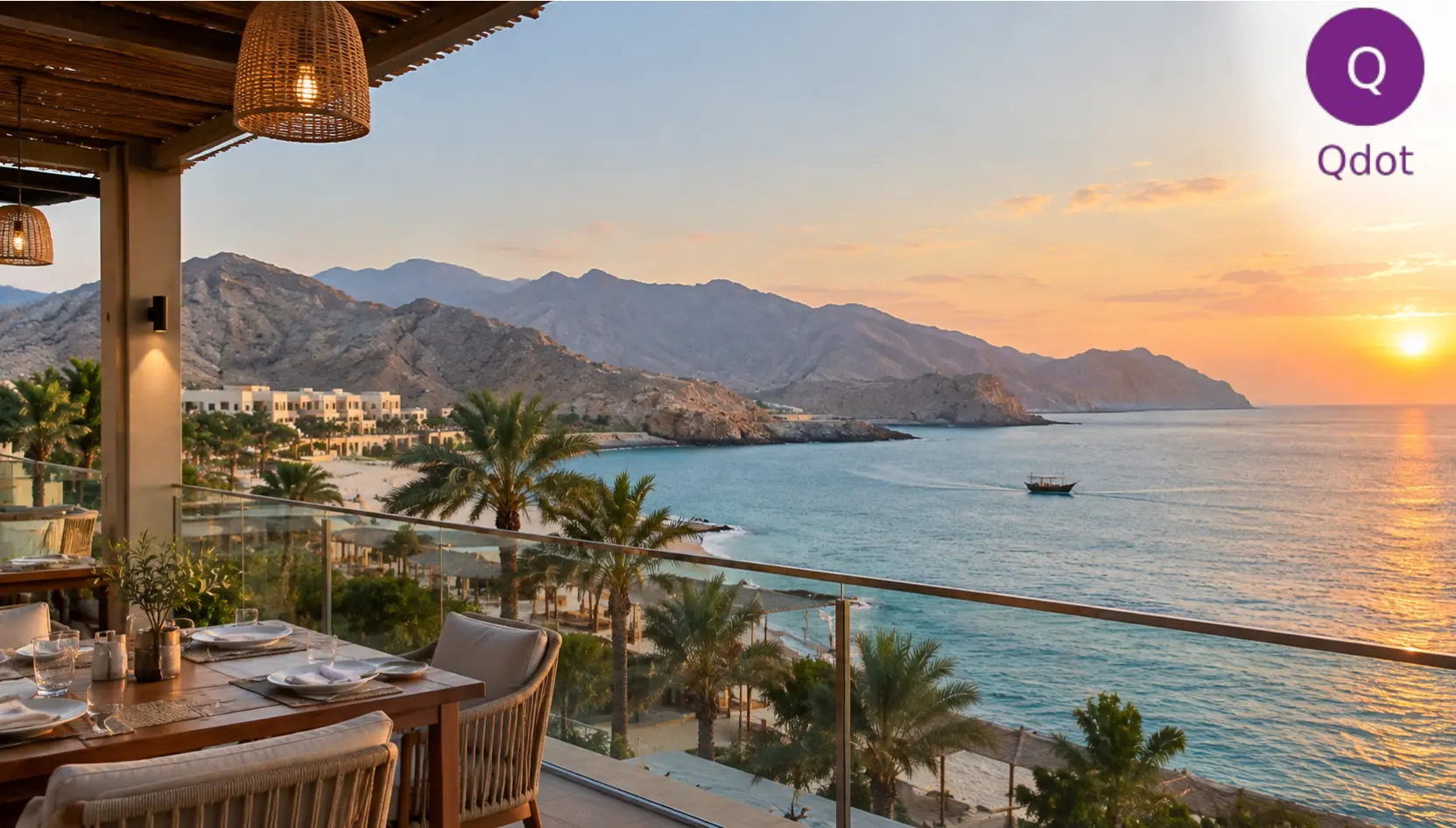
Oman is not chasing mass tourism numbers. Vision 2040 backs the sector with roughly US$31 billion in planned investment through 2040, built around high-value, low-impact experiences rather than high-volume arrivals. For hotels, resorts, tour operators and travel agencies, that positioning turns guest experience consistency and environmental care into commercial differentiators, not side commitments. ISO certification for the tourism and hospitality sector in Oman gives operators a documented way to prove both, alongside the safety, food handling and data controls that sit behind every guest interaction.
The Same Group Can Run a Desert Camp, a Mountain Lodge and a Coastal Resort
Oman's tourism map covers very different operating environments, and each one changes what a management system actually needs to control.
- Desert camps in the Sharqiya Sands deal with water scarcity, generator power, waste removal and heat-related risk for guests and staff.
- Mountain retreats around Jebel Akhdar sit on fragile terrain and need water conservation and guest safety controls on trails and viewpoints.
- Coastal resorts along the Muscat coastline and the Musandam fjords manage marine habitat protection and water sports safety, and storm exposure has been real: Cyclone Gonu in 2007 and Cyclone Shaheen in 2021 both disrupted Oman's coast.
- Salalah's khareef season, roughly June to September, brings a sharp seasonal surge in domestic and regional visitors that strains staffing, food supply and service consistency for a few months each year.
A single generic management system rarely serves all four settings equally well. The ISO scope should follow the property and terrain, not the industry label.
ISO 14001 and ISO 9001 Sit at the Center of Oman's Tourism Positioning
Environmental care is not a marketing line in Oman's tourism strategy, it is the stated basis for how the sector wants to grow. ISO 14001 consultancy in Oman gives desert camps, mountain lodges and coastal resorts a structured way to manage water use, waste, energy and habitat impact, and to show that in writing to owners, investors or a government partner rather than just in a brochure.
Guest experience is the other half. The Ministry of Heritage and Tourism scores hotels and resorts against a published set of roughly 350 service and facility criteria to award star or key ratings. ISO 9001 consultancy in Oman builds the documented procedures behind housekeeping, front office, maintenance and complaint handling that keep that score consistent across seasons and staff turnover, rather than dependent on whichever team is on shift.
Food Safety, Worker Safety and Guest Data Sit Behind the Scenes
Guests rarely see these controls directly, but they notice quickly when one fails.
Restaurants, banqueting kitchens and room service all answer to Oman's food safety inspection system, run through the Food Safety and Quality Centre under the Ministry of Agriculture, Fisheries and Water Resources. ISO 22000 or HACCP gives F&B teams documented hazard analysis and critical control points, which matters most during high-occupancy periods like Salalah's khareef season when kitchens are under the most pressure.
Pools, water sports, kitchens and desert or mountain excursions carry injury risk. Since April 2026, adventure tourism operators licensed under Oman's updated Tourism Law executive regulation must hold a safety audit certificate and a documented risk and safety management plan. ISO 45001 consultancy in Oman builds the risk assessments and incident procedures that support this requirement and protect staff working around water, heat and kitchen hazards.
Reservations now arrive through hotel systems, OTAs, travel agents and mobile apps, each holding guest identity and payment data. ISO 27001 gives properties and agencies a framework for access control and incident response across these channels, relevant to a boutique Nizwa guesthouse and a large beach resort alike.
Planning Around Cyclones, Khareef Season and Multi-Site Groups
Two operational risks deserve their own planning rather than being folded into daily procedures. Coastal storm events and Salalah's seasonal visitor surge both disrupt normal operations in ways that are predictable in pattern even if not in timing. ISO 22301 helps resorts and tour operators plan guest communication, supply continuity and staff safety for these periods, rather than improvising each time.
Groups operating across Muscat, Salalah, Musandam or the interior, or combining a hotel with an in-house travel agency, also need to decide early whether each site and licence holds its own certificate or whether one integrated system covers the group. That decision shapes documentation structure and audit scope, and it is far easier to set correctly during gap analysis than to unpick afterward.
Where a Gap Assessment Usually Starts
Qdot works with Oman hotels, resorts, desert and mountain camps, and travel or adventure tourism operators from initial gap analysis through documentation, staff training, internal audit and certification audit preparation. Because guest classification scoring, food safety inspections and ISO audits often check overlapping evidence, gap analysis typically starts by mapping what the business already has to prove to MHT or the Food Safety and Quality Centre, then building outward from there. Qdot is a consultancy, not a certification body; the certificate itself is issued independently by an IAF-accredited certification body after audit.
For a full view of standards and locations Qdot supports across the Sultanate, see ISO consultancy in Oman.
Talk to Qdot
If your resort, camp or agency is trying to turn Oman's sustainability and quality positioning into something a guest, an owner or an auditor can actually verify, a short gap assessment against ISO 9001, ISO 14001 or ISO 45001 is a reasonable place to start.
FAQs
Scope adjusts to the operation. A small camp's environmental management system covers fewer processes than a large resort's, but the same structure, water, waste, energy, habitat, applies at any size.
No. The standards that apply may be similar, but the documented procedures should reflect the actual property, its terrain, its staff numbers and its guest volume, not a copy of a larger resort's system.
It gives the business a tested plan for guest communication, staffing and supply continuity before disruption happens, rather than a set of decisions made under pressure during the event itself.
ISO 9001 is usually still relevant for booking accuracy, supplier management and complaint handling. ISO 27001 matters if the agency holds significant guest payment or identity data.
Many hospitality businesses combine ISO 9001, ISO 14001 and ISO 45001 into one integrated management system with a single set of internal audits, rather than running three unconnected systems.