 UAE
UAE
 Qatar
Qatar
 Pakistan
 KSA
KSA
 Oman
Oman
 Kuwait
 Bahrain
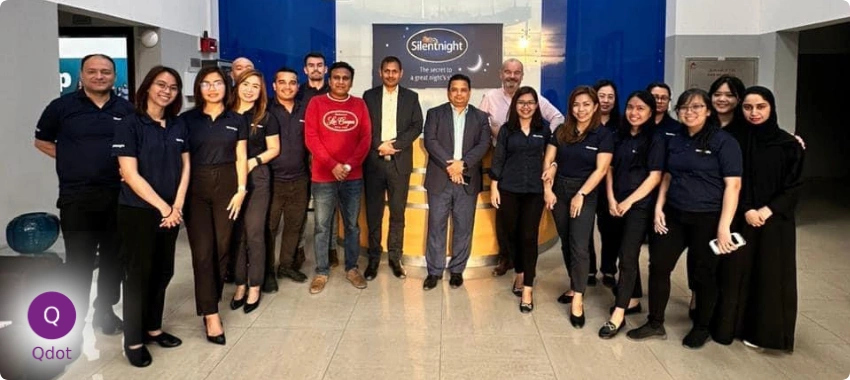
Qdot provides ISO consultancy in Saudi Arabia, helping organizations prepare properly for ISO certification in Saudi Arabia rather than rushing paperwork before an audit. We work with businesses across the Kingdom to close the gap between where their management system stands today and what an accredited certification audit expects to see, through gap analysis, documentation, implementation, training, internal audit and audit readiness support. The final certification decision itself is always made by an independent, accredited certification body — Qdot's role is to get you genuinely ready for it. Saudi companies typically come to us because a tender, a customer, a vendor registration portal or their own internal governance requires certification, and they need a consultant who can get them there without guesswork.
What ISO Consultancy Actually Involves
An ISO consultant is not the same as a certification body, and the distinction matters more than most businesses realize when they start looking. A certification body carries out the certification audit and issues the certificate. An ISO consultant — which is what Qdot is — works on the other side of that line. We help you build the management system, document it correctly, train your people, run the internal audit, close the gaps, and get the organization genuinely ready before that external audit ever takes place.
This separation isn't a technicality. It protects the integrity of the certificate itself. A consultancy that also tried to certify its own clients would have an obvious conflict of interest, which is why credible ISO certification consultants in Saudi Arabia keep a clear line between preparation work and the independent audit that follows it.
How ISO Consultancy Connects to ISO Certification
Businesses often ask where consultancy ends and certification begins. In practice, it's a single connected journey:
- Identify the need — a tender, customer requirement, vendor registration portal or internal decision points to a specific ISO standard.
- Select the applicable standard — quality, environmental, occupational health and safety, food safety, information security, business continuity or another recognized standard, based on the business activity.
- Gap analysis — comparing current practice against the standard's requirements to see what's already in place and what's missing.
- Documentation — building the policies, procedures, records and forms the standard requires, matched to how the business actually operates.
- Implementation — putting the documented system to work day to day, not leaving it on a shelf.
- Training — making sure process owners, staff and internal auditors understand their role in the system.
- Internal audit — testing the system from the inside before anyone external does.
- Management review — senior management formally reviewing performance, risks and improvement actions.
- Corrective actions — closing any nonconformities found during internal audit or management review.
- Certification audit preparation — making sure the organization is genuinely ready for Stage 1 and Stage 2 audits.
- Independent certification body — the accredited body that conducts the certification audit.
- Certification decision — the certificate is awarded (or not) based on audit results, entirely at the certification body's discretion.
Qdot's consultancy work covers everything up to and including audit readiness. The certification decision itself sits with the certification body, and no consultancy — including Qdot — can guarantee a specific outcome. What a good ISO certification consultant in Saudi Arabia can guarantee is that the organization walks into that audit properly prepared.
What ISO Certification Requirements Usually Look Like
Requirements vary by standard, but most ISO certification projects in Saudi Arabia share a common core: a documented management system with a defined scope, evidence of implementation (not just paperwork), records of internal audit and corrective action, a completed management review, and staff who understand the system well enough to answer an auditor's questions confidently. Organizations without a quality culture or existing documentation typically need more preparation time; organizations with an established but informal system often move faster because the gap analysis finds less missing.
Certification Bodies and Accreditation
Certification in Saudi Arabia is carried out by independent certification bodies operating under recognized accreditation. Accreditation means the certification body itself has been assessed and approved to issue certificates that are internationally recognized — it's the mechanism that gives an ISO certificate its credibility with customers, tenders and regulators. Qdot does not audit or certify its own consultancy clients. Our role is to prepare your organization, help you understand what an accredited certification body will expect, and support coordination around the audit itself, while the certification body remains fully independent in reaching its decision.
What Affects ISO Consultancy Cost and Certification Timeline in Saudi Arabia
There's no single fixed price or fixed timeline for ISO certification in Saudi Arabia, because both depend on the business itself. The main factors are:
| Factor | Why it matters |
|---|---|
| Scope and number of standards | A single standard is quicker and simpler than an integrated system covering several |
| Headcount and number of sites | More people and locations mean more documentation, training and evidence to manage |
| Existing documentation and quality culture | A business with some structure already in place needs less gap-closing work |
| Complexity of processes | Multi-step production, regulated products or high-risk activities take longer to document properly |
| Staff availability and cooperation | Consultancy timelines depend on how quickly staff can attend training and interviews |
As a general guide, a small to mid-sized organization certifying to a single standard can often become audit-ready within 45 to 60 days of starting, assuming reasonable staff availability. Larger, multi-site or multi-standard projects take longer. Qdot builds cost and timeline proposals around these factors after understanding your business, rather than quoting a generic figure that doesn't reflect your actual scope.
ISO Standards We Help Saudi Businesses Prepare For
Qdot supports consultancy and certification readiness for a range of recognized standards used across Saudi Arabia, including:
- ISO 9001 — quality management, relevant to almost any business activity
- ISO 14001 — environmental management
- ISO 45001 — occupational health and safety
- ISO 22000 — food safety management
- ISO 27001 — information security management
- ISO 22301 — business continuity management
- HACCP and Halal — food safety and Halal compliance
- GMP — good manufacturing practice
Several businesses pursue more than one standard together as an integrated management system, which reduces duplicate documentation and audit effort. If your requirement falls outside this list, our specialized standards page covers additional options.
Industries Across Saudi Arabia That Rely on ISO Systems
ISO certification in Saudi Arabia is not limited to one sector. Demand typically comes from:
- Manufacturing — meeting customer and export requirements
- Construction and EPC — responding to project prequalification criteria
- Oil and gas suppliers — meeting vendor registration standards
- Food businesses — managing safety and Halal compliance
- Healthcare and medical device suppliers — meeting regulatory and quality expectations
- Logistics and facility management — standardizing operations across sites
- IT and professional services — handling client data responsibly
Both SMEs preparing for their first certification and larger organizations managing multi-site, multi-standard programs turn to ISO consultancy for the same underlying reason: a tender, customer or governance requirement they need to satisfy properly rather than superficially.
After Certification: Surveillance Audits and Recertification
Getting certified isn't the end of the process. ISO certificates typically run on a three-year cycle, with surveillance audits in years one and two to confirm the system is still being maintained, and a full recertification audit in year three. Qdot supports clients through this ongoing cycle — refreshing internal audits, updating documentation when a standard is revised, and preparing for each surveillance visit — so the certification stays valid rather than lapsing quietly a year after the initial audit.
Where We Support Businesses in Saudi Arabia
Qdot provides ISO consultancy support to organizations across Riyadh, Jeddah, Dammam, Al Khobar, Jubail, Yanbu, Mecca, Madinah and Tabuk, through onsite visits, remote sessions or a hybrid delivery model depending on project scope and site locations.
Why Businesses Work With Qdot
Qdot is itself certified to ISO 9001:2015 and ISO 20700:2017, the international standard for management consultancy services — so the way we run our own consultancy is held to the same discipline we help clients build. Since 2016, Qdot has supported more than 4,000 clients and completed over 1,000 successful ISO certifications across the UAE, Saudi Arabia, Qatar and the wider GCC, with around 95% of clients staying with us long-term into their surveillance and recertification cycles rather than treating certification as a one-off project. You can see the full step-by-step process we follow on our methodology page.
We also don't hold a commercial relationship with any specific certification body, which keeps our advice independent — we help you get ready and understand what to expect, but the choice of certification body and its final decision are entirely separate from our consultancy work.
Ready to Start?
Tell us your business activity, employee count, site locations, the standard you need and your target certification date, and we'll propose a realistic route through gap analysis, documentation, implementation and audit readiness. Get a quote or contact our team to start the conversation.
FAQs
ISO consultancy is professional support to help an organization prepare its management system for ISO certification. This covers gap analysis, documentation, implementation, staff training, internal audit and audit readiness. The consultancy prepares the business; it does not issue the certificate itself.
ISO consultancy is the preparation work — building and implementing the management system so it meets the standard's requirements. ISO certification is the outcome, awarded by an independent, accredited certification body after a formal certification audit. One leads into the other, but they are carried out by separate parties.
No. Qdot is a consultancy. We prepare organizations for certification through gap analysis, documentation, training, internal audit and audit readiness support. The certification audit and the decision to certify are carried out independently by an accredited certification body.
It typically starts with selecting the applicable standard, followed by gap analysis, documentation, implementation, staff training, internal audit, management review and corrective actions. Once the organization is genuinely ready, the certification body conducts the certification audit and decides whether to award the certificate.
Most standards require a documented management system with a defined scope, evidence that the system is actually being followed, completed internal audits, closed corrective actions, and a management review. The exact detail depends on which standard applies to your business.
Cost depends on the scope and number of standards involved, the number of employees and sites, how much documentation already exists, how complex the business's processes are, and how quickly staff can engage with training and interviews. There is no single fixed price that applies to every business.
Timelines vary with company size and complexity. As a general guide, a small to mid-sized organization pursuing a single standard can often become audit-ready in around 45 to 60 days, assuming reasonable staff availability. Multi-site or multi-standard projects generally take longer.
We support consultancy for ISO 9001, ISO 14001, ISO 45001, ISO 22000, ISO 27001, ISO 22301, ISO 13485, HACCP, Halal and GMP, along with other recognized standards depending on your industry and objective.
ISO certificates generally run on a three-year cycle, with surveillance audits in years one and two and a full recertification audit in year three. Qdot continues supporting clients through this cycle so the certification stays valid rather than lapsing.
Look for a consultant that clearly separates its role from the certification body, works from a documented methodology rather than generic templates, explains realistic cost and timeline factors upfront, and has demonstrable experience preparing businesses in your industry for the specific standard you need.